2nd Oct 2026
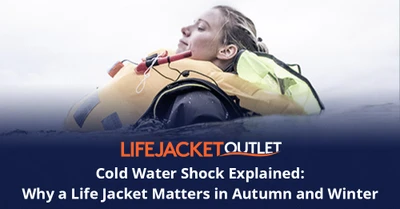
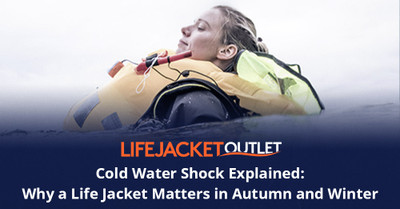
Cold water shock is the body’s immediate, involuntary response to sudden immersion. An initial gasp, very rapid breathing and loss of control can occur before hypothermia develops, making even a strong swimmer vulnerable. A correctly fitted life jacket supports the airway during those first critical moments and reduces the need to tread water.
The strongest setup for unexpected autumn and winter immersion combines automatic inflation, secure crotch or thigh straps, suitable buoyancy, a spray hood, light, personal means of calling for help and a practised recovery plan. This guide explains why each element matters.
Cold water can disable a strong swimmer before hypothermia develops
The first danger is an involuntary gasp and loss of breathing control. A correctly fitted automatic life jacket can support the airway while the wearer concentrates on floating, controlling breathing and raising the alarm.
Contents
- Key facts at a glance
- What is cold water shock?
- What happens in the first minutes
- What a life jacket changes
- Automatic or manual inflation in cold water
- Fit, crotch straps, hood and light
- Clothing, drysuits and flotation suits
- What to do if you fall into cold water
- Recovery and aftercare
- Autumn and winter boating checklist
- Frequently asked questions
- Technical references
Key facts at a glance
- The RNLI describes cold water shock as an uncontrollable response that can occur when the body is suddenly submerged in water around 15°C or lower.
- The initial gasp can draw water into the airway if the face is submerged.
- Breathing rate and heart workload can rise sharply before the person has time to think clearly.
- The first objective is to keep the airway supported and regain breathing control, not to begin an immediate long swim.
- Automatic inflation is valuable when the wearer may be shocked, injured or unable to pull a toggle.
- Crotch straps reduce ride-up and help the life jacket maintain its designed face-up position.
- A spray hood protects against wind-blown spray and waves after the first cold-shock phase.
- A life jacket light and personal locator beacon improve the chance of being found in darkness or poor visibility.
- A life jacket is not thermal protection; clothing, prompt alerting and rapid recovery remain essential.
- Cold-water plans should include how to recover a fully clothed, possibly incapacitated person back onto the boat.
What is cold water shock?
Cold water shock is the body’s immediate response to sudden immersion. It is different from hypothermia, which develops as body temperature falls over a longer period. The shock response can begin instantly: an involuntary gasp, uncontrollable rapid breathing, increased heart rate, raised blood pressure and a powerful urge to move or panic.
These reactions matter because a person who enters the water unexpectedly may have their face below the surface at the moment of the gasp. Even after resurfacing, rapid breathing makes it difficult to coordinate swimming, operate equipment or shout. Waves, darkness, injury and heavy clothing intensify the problem.
UK waters can be cold enough for this response well beyond midwinter. Air temperature and sunshine do not reveal the water temperature, and inland water can remain cold after warm weather. Treat autumn, winter and early-season boating as cold-water operations and use the same disciplined preparation offshore throughout the year.
What happens in the first minutes
| Phase | Possible effects | Priority |
|---|---|---|
| Immediate immersion | Involuntary gasp, brief disorientation and possible water inhalation. | Keep the airway above water; let the life jacket support the body. |
| First 60–90 seconds | Very rapid breathing, panic, increased heart and blood pressure load. | Do not attempt a hard swim. Concentrate on slower breathing and floating. |
| Next several minutes | Cooling of muscles and nerves reduces grip, coordination and swimming ability. | Raise the alarm, remain with flotation and move only towards a genuinely reachable exit. |
| Longer exposure | Progressive cooling, fatigue, confusion and hypothermia risk. | Conserve heat, use hood/shelter where possible and obtain prompt rescue. |
| Recovery | Afterdrop, exhaustion and medical complications can occur after removal from the water. | Handle gently, protect from further heat loss and obtain appropriate medical advice. |
Do not use the table as a stopwatch
Response varies with age, health, clothing, water, waves and injury. Serious incapacity can occur rapidly. The safest assumption is that every unexpected cold-water immersion requires immediate support and rescue.
What a life jacket changes
A suitable life jacket creates buoyancy without requiring the wearer to tread water. That matters during the gasp and hyperventilation phase, when deliberate swimming may be impossible. A performance-level life jacket is designed to support a safer face-up position and, within its tested conditions, turn an unconscious person. A buoyancy aid provides useful flotation but is not generally designed to turn an unconscious wearer.
The jacket also gives the casualty time. Instead of spending energy keeping the mouth above water, they can control breathing, make themselves visible, activate a beacon and wait for recovery. The existing life jacket and buoyancy aid comparison explains which product type is appropriate for different activities.
Choose a jacket that can support an unexpected immersion
For general cruising and open-boat use, compare automatic models that fit securely over autumn and winter clothing.
Automatic or manual inflation in cold water
An automatic life jacket activates without the wearer having to locate the pull toggle. This is a strong advantage after an impact, medical event, boom strike or cold-shock gasp. It is the normal starting point for family cruising, solo boating, fishing from a boat and other activities where falling in is not expected.
A manual life jacket only provides its gas buoyancy after the toggle is pulled. It can be appropriate for trained users in activities where regular immersion or spray makes automatic inflation undesirable. The trade-off must be explicit: a person who is unconscious, injured, panicking or unable to use their hands may not activate it.
Hydrostatic automatic mechanisms can reduce unwanted activation from rain and spray while still providing hands-free inflation after submersion. They require their exact replacement unit and maintenance. Whatever the system, the manual toggle should remain visible and the wearer should practise locating it with either hand and with gloves.
Fit, crotch straps, hood and light
Cold-water buoyancy is only useful if the jacket remains on the torso. Tighten the waist belt over the full clothing system and secure every crotch or thigh strap. The RNLI illustrates how crotch straps reduce ride-up and help keep the airway higher. A loose jacket can inflate around the ears and make it difficult to see, breathe or use the spray hood.
After inflation, waves and wind-blown spray can repeatedly cover the face. A compatible spray hood creates a protected breathing space and reduces heat loss from the head while improving visibility to rescuers. It should have suitable ventilation and be fitted and folded according to the life jacket manufacturer.
A life jacket light is particularly valuable during short winter days, night passages and poor weather. Check its service date and position. Retro-reflective material helps only when a searchlight reaches it; an active light can reveal the casualty earlier. A PLB provides a recognised satellite distress alert when manually activated and registered, while compatible AIS MOB devices can alert nearby equipped vessels.
Clothing, drysuits and flotation suits
Warm layers slow heat loss, but clothing can trap air and change body orientation. Waterproof salopettes, boots, waders and drysuits can make self-righting less predictable. Fit and buoyancy must be assessed as a system. A 275N-class life jacket may be appropriate for heavy protective clothing, but extra Newtons do not correct a loose belt or unused crotch strap.
A flotation suit is not automatically a life jacket. It may provide inherent buoyancy and warmth while failing to turn an unconscious wearer face-up. A drysuit also requires correct seals, thermal layers and, where appropriate, training to manage trapped air. Follow both garment and life jacket manufacturers’ compatibility instructions.
Wear the life jacket outside clothing unless its instructions specify another approved arrangement. Do not compress the bladder beneath a tight coat, backpack or fishing vest. Use the detailed adult life jacket fitting guide to check the winter clothing combination.
What to do if you fall into cold water
- Let the life jacket support you. Avoid an immediate frantic swim unless a secure exit is genuinely within a few strokes.
- Protect the airway and control breathing. Lean back, spread the arms and legs for stability and focus on slowing the breath.
- Raise the alarm. Shout when breathing permits, use the whistle, activate a light and operate the personal distress device carried on the body.
- Stay with flotation and the boat where possible. A vessel is easier to locate than a person in the water and may provide something to hold.
- Reduce heat loss. Keep movement controlled. If alone and stable, bring the limbs closer; in a group, use a huddle where practical without compromising airways.
- Deploy the spray hood. Use it once breathing is controlled and waves or spray threaten the face.
- Move towards a safe exit only when realistic. Account for current, waves, flooded clothing and loss of grip. Do not waste energy on an unreachable bank or boat.
The RNLI’s Float to Live advice is designed to help a person survive the initial shock: lean back, use the flotation available, keep the airway clear and regain breathing control before deciding what to do next. Practising the concept on land makes it easier to recall under stress.
Recovery and aftercare
The crew must be able to stop the boat, keep the casualty in sight and bring them aboard. A high-sided yacht or motorboat may need a lifting strop, halyard, recovery sling or purpose-designed ladder. A bathing ladder that cannot be lowered from the water is not a complete solo-boating plan.
Recover the person as horizontally and gently as the circumstances allow, especially after prolonged immersion. Remove wet clothing only in a sheltered environment, prevent further cooling and seek emergency or medical advice according to the casualty’s condition. Confusion, reduced consciousness, chest pain, breathing difficulty and persistent severe shivering require urgent attention.
A life jacket harness and safety line can prevent immersion in the first place. In rough weather, staying attached using suitable strong points and the shortest practicable tether is safer than relying entirely on recovery after a fall.
Autumn and winter boating checklist
- Check current water temperature and forecast, not air temperature alone.
- Wear life jackets before leaving the berth and keep them on during deck work.
- Adjust belts and crotch straps over the actual winter clothing.
- Inspect cylinders, automatic components, lights and spray hoods.
- Carry a model-matched re-arming kit where the voyage justifies it.
- Keep a waterproof communication method on each person, not in the cabin.
- Brief the crew on manual inflation, hood deployment, Float to Live and MOB recovery.
- Rig jackstays and strong points before conditions deteriorate.
- Test the recovery ladder or lifting method with a realistic load.
- File a passage or shore contact plan and allow for reduced daylight.
Frequently asked questions
At what temperature does cold water shock happen?
The RNLI uses 15°C or lower as a useful cold-water threshold, but individual responses vary and colder water generally increases the risk. UK water can remain below this level when the weather feels mild.
Can a strong swimmer overcome cold water shock?
Fitness helps later, but the initial gasp and rapid breathing are involuntary. A life jacket supports the airway while the swimmer regains control.
Should I swim back to the boat immediately?
Only if it is genuinely within a very short, achievable distance and conditions allow. First control breathing and use the flotation. Frantic swimming accelerates heat loss and can lead to rapid exhaustion.
Does a 275N jacket prevent hypothermia?
No. It supplies buoyancy, not insulation. Clothing, spray protection, signalling and rapid recovery are still required.
Will an automatic life jacket inflate in rain?
Conventional soluble-element systems can be vulnerable to heavy wetting if water reaches the mechanism; hydrostatic systems reduce that risk. Correct cover closure, storage and model choice matter.
Why do I need a spray hood if my life jacket keeps me face-up?
Waves and wind-blown spray can still cover the mouth and nose. A hood creates a more protected breathing space and improves visibility.